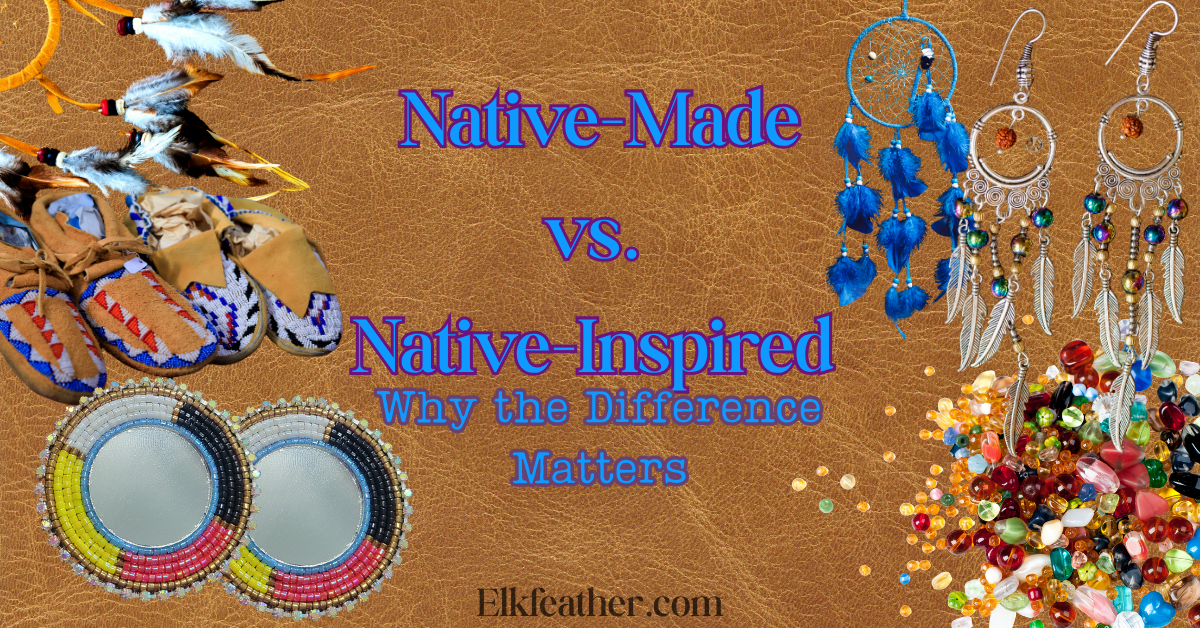
Native made vs Native inspired is a topic that continues to spark important conversations in the Native American art community. In the world of social media and on-line markets this is a topic that is brought up time and time again.
In today’s art and handmade marketplace, you’ve probably seen the phrases “Native-made” and “Native-inspired” used interchangeably. At first glance, they may seem similar, but within the Native American art community, they carry very different meanings, and confusing the two can cause real harm. Native made vs Native Inspired is a topic that confuses, and maybe there is some misunderstanding.
Let’s talk about why.
What Does Native-Made Mean?
“Native-made” refers to artwork created by an enrolled or recognized Indigenous artist. This includes Native American, First Nations, and other Indigenous peoples whose cultural traditions, techniques, and designs are part of a living heritage.
When you purchase Native made art, you are:
- Supporting an Indigenous artist directly
- Investing in authentic cultural expression
- Helping preserve traditions that have been passed down for generations
This isn’t just about aesthetics, it’s about identity, history, and sovereignty.
What Is “Native-Inspired”?
“Native inspired” is typically used to describe items created by non-Native individuals who are influenced by Indigenous styles, patterns, or themes.
This is where things get complicated.
While inspiration exists in all forms of art, using Indigenous designs without cultural understanding, or worse, marketing those items in ways that imply authenticity, crosses a line.
The Real Issue: Misrepresentation and Cultural Appropriation
The issue isn’t just inspiration; it’s misrepresentation and, in many cases, cultural appropriation.
When non-Native sellers:
- Use terms like “Native style,” “tribal,” or “Southwest” to attract buyers
- Avoid clearly stating they are not Native-made
- Or worse, allow buyers to assume authenticity
…it creates confusion in the marketplace.
That confusion directly impacts Native artists by:
- Undercutting their pricing
- Flooding the market with imitation goods
- Making it harder for buyers to find authentic work
And most importantly, it disrespects the cultural origins of the designs being used.
Why Authenticity Matters
For Indigenous artists, beadwork, regalia, and design are not just crafts; they are deeply tied to:
- Cultural identity
- Spiritual meaning
- Tribal history and teachings

Certain patterns, color combinations, and techniques can carry specific meanings or be tied to particular tribes or families.
When these elements are copied without permission or understanding, it becomes more than imitation; it becomes cultural appropriation.
There Is Also a Legal Side: The Legal Protection of Native American Art
In the United States, there is actual legislation addressing this issue: the Indian Arts and Crafts Act of 1990.
This law makes it illegal to:
- Market art or craftwork as “Native American-made.”
- If it is not created by a Native artist
Violations can result in serious penalties, including fines and legal action.
That’s how important authenticity is not just culturally, but legally. So Native Made vs native inspired is not just an “It isn’t right” issue, it’s one of legality. It’s illegal to sell products that you claim are Native American-made when they’re not.
How to Shop (and Sell) Responsibly
Whether you’re an artist or a buyer, here are a few simple ways to help protect Indigenous art. When it comes to native made vs native inspired, remember:
If you’re buying:
- Look for artist information or tribal affiliation
- Purchase from trusted Native-owned businesses (like Elk Feather Art Gallery)
- Don’t be afraid to ask questions about authenticity
If you’re creating:
- Be honest and transparent about your background
- Avoid using language that suggests Native origin if it isn’t
- Respect cultural boundaries and protected designs
Final Thoughts
The conversation around Native made vs. Native inspired isn’t about limiting creativity; it’s about respect, truth, and fairness.
Indigenous artists deserve recognition for their work, their culture, and their contributions. When we protect the meaning behind “Native made,” we help ensure those traditions continue to thrive for future generations.

At Elk Feather Art Gallery, authenticity matters. Every piece tells a story, and those stories deserve to be told by the people they belong to, which is why the subject of Native made vs. Native inspired matters.
Understanding the difference between Native made vs Native inspired art is essential for anyone who values authenticity and ethical purchasing. While Native inspired designs may appear similar on the surface, they do not carry the same cultural significance, lived experience, or generational knowledge as Native made pieces. When buyers take the time to learn this distinction, they not only make more informed choices but also help support Indigenous artists whose work reflects true cultural identity and tradition. Choosing Native made over Native inspired art is a meaningful way to honor and preserve Indigenous creativity.
Frequently Asked Questions
What is the difference between Native made and Native inspired art?
Native-made art is created by Indigenous artists, while Native-inspired art is made by non-Native individuals influenced by Indigenous styles.
Is it illegal to sell Native inspired art as Native made?
Yes. Under the Indian Arts and Crafts Act of 1990, it is illegal to market non-Native products as Native-made.
Why is cultural appropriation an issue in Native American art?
It involves using Indigenous designs and cultural elements without permission, often profiting from traditions that are not understood or respected.
How can I make sure I’m buying authentic Native American art?
Look for artist information, tribal affiliation, and buy from trusted Native-owned businesses like Elk Feather Art Gallery and the ones we promote.
Shop authentic Native made earrings——–> Elk Feathers Art Gallery Beaded Earrings